
The ceasefire is still technically holding, to the extent that no overt hostilities have been reported yet, but the rhetoric has hardened dangerously. The week ahead will also clarify whether the Islamabad failure was a negotiating tactic or whether Washington has genuinely locked itself into a position from which the only exits are climb-down, escalation, or the slow bleed of a new status quo that nobody chose and nobody controls. Prem Panicker continues his must read blog on the Iran War.

In a tweet on Monday, Zarif said," Iran condemns the wave of organised violence against Indian muslims."
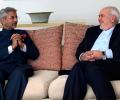
'Tehran,' Foreign Minister Zarif said, 'had expected the Modi government to be "more resilient" in the face of Washington's bullying,' notes Ambassador M K Bhadrakumar.
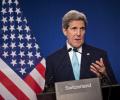
At scaling back Tehran's nuclear programme and relieving the Islamic Republic from the sanctions

Nine Indian sailors who were in a jail in Iran on charges of smuggling have been released and will reach Delhi on Wednesday, External Affairs Minister Sushma Swaraj informed.
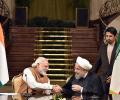
Iranian Ambassador to India Ali Chegeni said his country is 'not for war'. "We are looking for peace and prosperity for everybody in this region," he said.

The President, in a tweet, said that the 52 sites include some 'very important to Iran and Iranian culture'. The tension between US and Iran has escalated since the killing of powerful General of pro-Iran militia in Iraq.
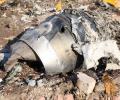
Iran's president Hassan Rouhani offered his apologies and condolences.

Iran's ambassador to the UN said the US allocation of $3 million for 'promoting democracy and human rights' in Iran was a clear violation of a 1981 US-Iranian agreement signed at Algiers.

The United States and Iran held their highest level of talks in over 30 years, during which Tehran put "possibilities" on the table to resolve the longstanding dispute over its nuclear programme, even as Washington sounded a cautious note.
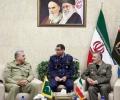
'Tehran senses that the Modi government is inexorably gravitating toward the US-Israeli-Saudi axis, jettisoning India's traditional independent Gulf policies,' notes Ambassador M K Bhadrakumar.

The United Nations has invited Iran to attend crucial Syria peace talks after it pledged to play a "positive and constructive role" but the surprise move provoked a pull-out threat from the Syrian opposition and caution from the US.

United States President Donald Trump has warned Iran of "major retaliation" if Tehran carries out any attack against America to avenge the killing of top military commander Qasem Soleimani and hinted at striking its cultural sites. His statement came hours after Iran announced it will no longer abide by the limits contained in the 2015 landmark nuclear deal.

The reversal of Trump's policy with regard to Iran, like the withdrawal from the Paris Agreement, may not be a matter of just turning the clock back, but one of patient negotiations, with uncertain consequences in the post-COVID-19 world, observes Ambassador T P Sreenivasan.

Foreign Minister Mohammad Javad Zarif tweeted that the attack near the Iraqi border was carried out by 'terrorists recruited, trained, armed & paid by a foreign regime'.

India has been eyeing deeper energy ties with Iran and has already lined up $20 billion as investment in oil and gas as well as in petrochemical and fertiliser sectors there.

The United States has lifted most of its sanctions against Iran after a UN watchdog reported that Tehran had complied with a nuclear weapons deal.
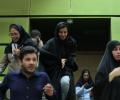
Deputy Interior Minister Mohammad Hossein Zolfaghari told Iran's state TV the apparently male attackers wore women's attire.

United States President Barack Obama has hailed the "historic understanding" reached between world powers and Iran over the framework of a deal on its contentious nuclear programme, even as Israel warned that it would threaten the Jewish state's survival.
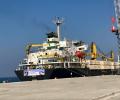
Iran's decision to keep India out and welcome China to the scene is a huge strategic setback for India, observes Dr Rajaram Panda.
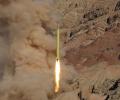
The United States on Thursday put Iran "on notice" for test-firing a ballistic missile and warned of consequences for its "malign actions", signalling a more hardline stance against Tehran that could set the stage for renewed confrontation between the two nations.

'A Russia-Iran-China-Pakistan geopolitical grouping is evolving at this point of time.' 'Given that the grouping is in its nascent stages, will this week's terrorist attack in Mirjaveh affect it?' asks Aveek Sen.
'None of these three countries -- Turkey, Iran or Malaysia -- ever made a hostile move against India to support the Pakistan-based terrorist elements,' notes Ambassador M K Bhadrakumar.

The meeting of the foreign ministers of the P5+1 nations aimed to smoothen out major bumps in reaching a nuclear deal with Iran has ended with a positive note.

The port is likely to ramp up trade between India, Afghanistan and Iran in the wake of Pakistan denying transit access to New Delhi for trade with the two countries.
In a major diplomatic breakthrough, the foreign ministers of United States and Iran will hold talks on Tehran's controversial nuclear drive at a landmark meeting on Thursday -- the first between the two states in more than 30 years.

India is monitoring the situation very closely and will see how it develops in the next few days.
After 20 months of hectic negotiations, Iran and six major powers have reached a historic deal to limit Teheran's nuclear programme in return for lifting of sanctions. Let's understand closely what the deal is all about.
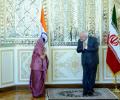
India's low passion, very cautious, relationship with Iran of the last 36 years awaits transformation, says Lieutenant General Syed Ata Hasnain (retd). Prime Minister Modi's visit cannot be a negotiating event; it is a symbolic one to strengthen the politico-diplomatic relationship.
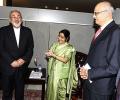
'All but one of the previous oil shocks brought either a change of government or a political crisis.' 'Is the government braced for stormy weather?' asks T N Ninan.

Saudi Arabia has severed diplomatic ties with Iran following attacks on the kingdom's embassy and consulate in the Islamic Republic over the execution of a Shiite cleric.

Negotiating a sustainable compromise with Iran is not getting any easier, and this delay might not yield the desired result of bringing Tehran's nuclear programme under stringent limits, says Claude Smadja
The Islamic State of Iraq and the Levant is a dangerous phenomenon, but the terrorist organisation can not be defeated by air strikes alone, Iranian Foreign Minister Mohammad Javad Zarif has said.

The Biden administration should expect continuity in Iran's policies under Raisi. This may not necessarily mean that strengthening of ties with the West will be Raisi's top priority, observes Ambassador M K Bhadrakumar.

External Affairs Minister Sushma Swaraj on Wednesday called on Afghan President Ashraf Ghani in Islamabad and discussed connectivity, terror threats to the war-torn country and the peace and reconciliation process there.

It is easy to foretell that negotiating a comprehensive and final agreement on the Iran nuclear issue is by no means an easy task. It involves hard negotiations, but the hardest step has been taken, says Ambassador M K Bhadrakumar, who was among the first group of foreigners to visit the the top-secret Arak plant hidden behind barren mountains south of Tehran.

Both statesmen possess a cultivated pugnacious style which they keep in reserve and can at will bring into play, and despite the mutual distrust in Russian-American relations, they are proponents of detente, quintessentially, who take their mission deadly seriously, points out Ambassador M K Bhadrakumar.

'The US appears to think that Pakistan is highly vulnerable today due to its economic crisis and one more turn of the screw may bring about desired results,' says Ambassador M K Bhadrakumar.

Lebanese Prime Minister Hassan Diab in a televised address to the county warned that those who were responsible for the devastating catastrophe will be held accountable and not go unpunished.
 © 2026 Rediff.com - Advertise with us - Disclaimer - Privacy Policy - Sitemap - Feedback - About us - Terms of use - Grievances